15 Photo Spots in Tokyo for Night Photography
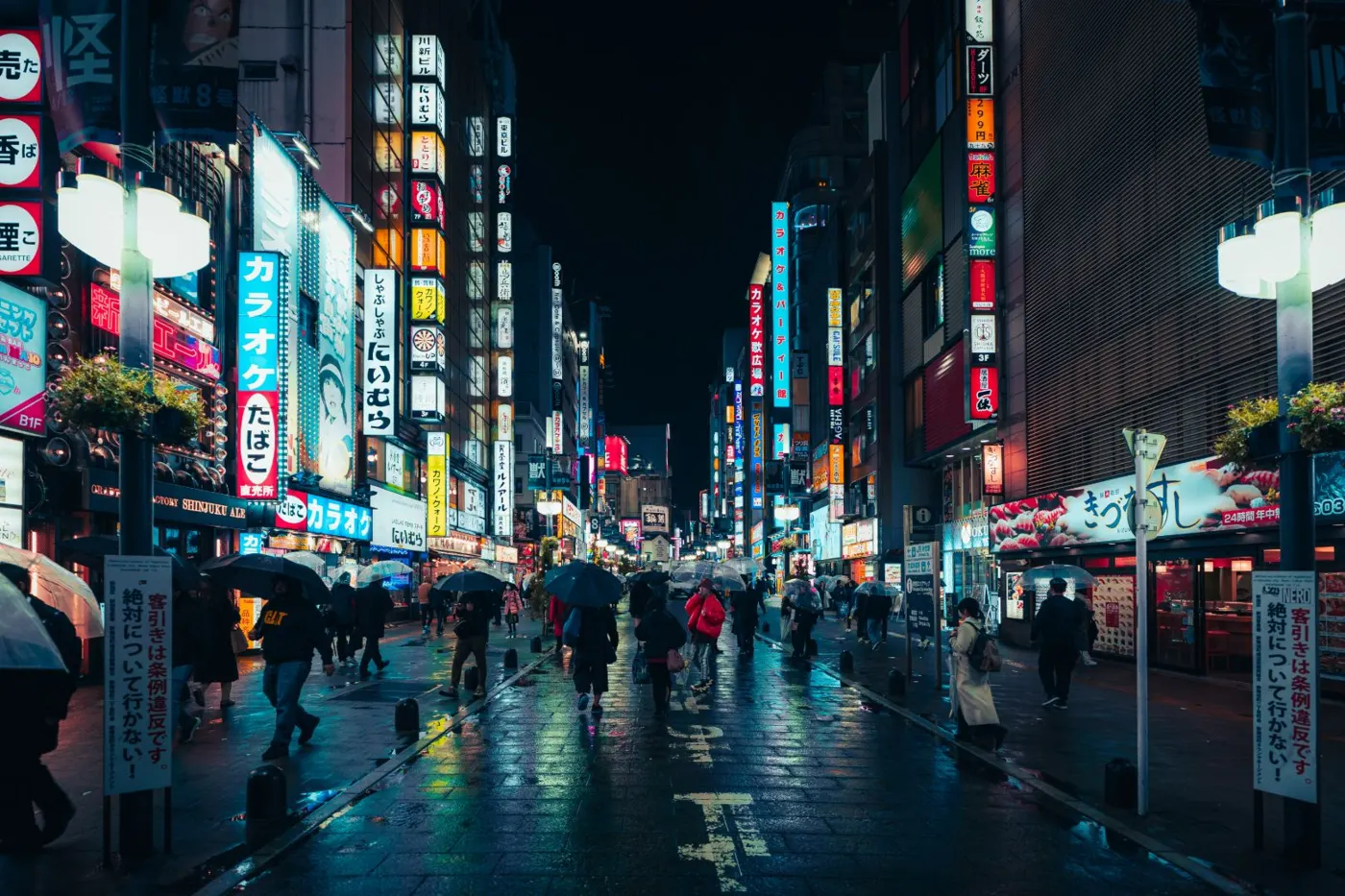
Tokyo is a night city. The light that makes it photogenic only exists after dark, and most of the good spots are not viewpoints you drive to - they are a specific corner of a specific crossing, or the fourth floor of a building with no sign on it. This is the list I actually use: fifteen locations across Shibuya, Shinjuku, Roppongi and the east side, each one I have stood at with a camera.
For every spot I have noted how to get in, whether a tripod is going to be a problem, and what the shot actually needs - because in Tokyo the difference between a good frame and a wasted evening is usually one detail nobody told you. Two things worth knowing before you set out: rain helps more often than you would think, and half the frames on this list are better on a wet night than a dry one. And three of these are indoor observation decks shot through glass, so a lens hood earns its place in the bag.
In this list
- Mag's Park Rooftop Shibuya Crossing
- Omoide Yokochō
- Kabukicho
- Shinjuku Golden Gai
- Tokyo Tower Bridge Street View
- BANGKOK NIGHT Shibuya
- Tokyo Metropolitan Government Building North Observatory
- Shibuya Sky
- Roppongi - Tokyo City View
- Uonami Fish Bar
- Asakusa Culture Tourist Information Center
- Akihabara Bridge Spot
- Jukken Bridge
- Azabudai Hills Mori JP Tower Tokyo Tower View
- Ueno Shopping Street
Mag's Park Rooftop Shibuya Crossing
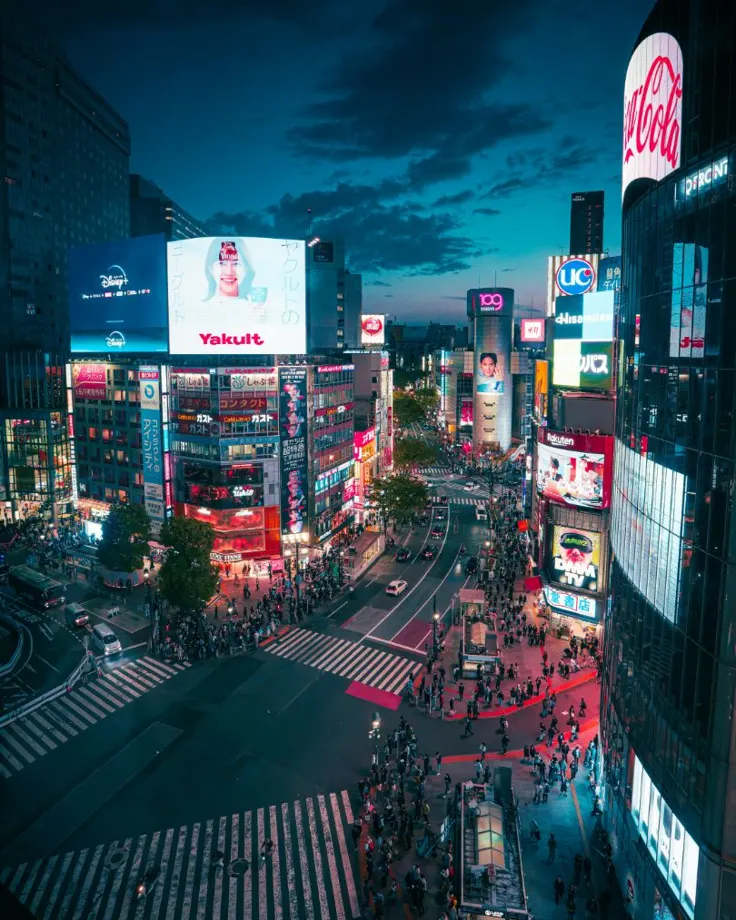
The Shibuya Crossing shot without the Shibuya Sky booking problem. You take the elevator to the top floor and the viewpoint entrance is right there when the doors open. The angle is lower than Shibuya Sky, which actually suits the crossing - you read the crowd as individual people rather than a pattern. Go up in blue hour and stay into full dark: that is the window where the crossing lights carry the frame instead of competing with the sky.
One gotcha
Entry is a drink purchase rather than a ticket. No tripods.
Photography
Getting There
Omoide Yokochō
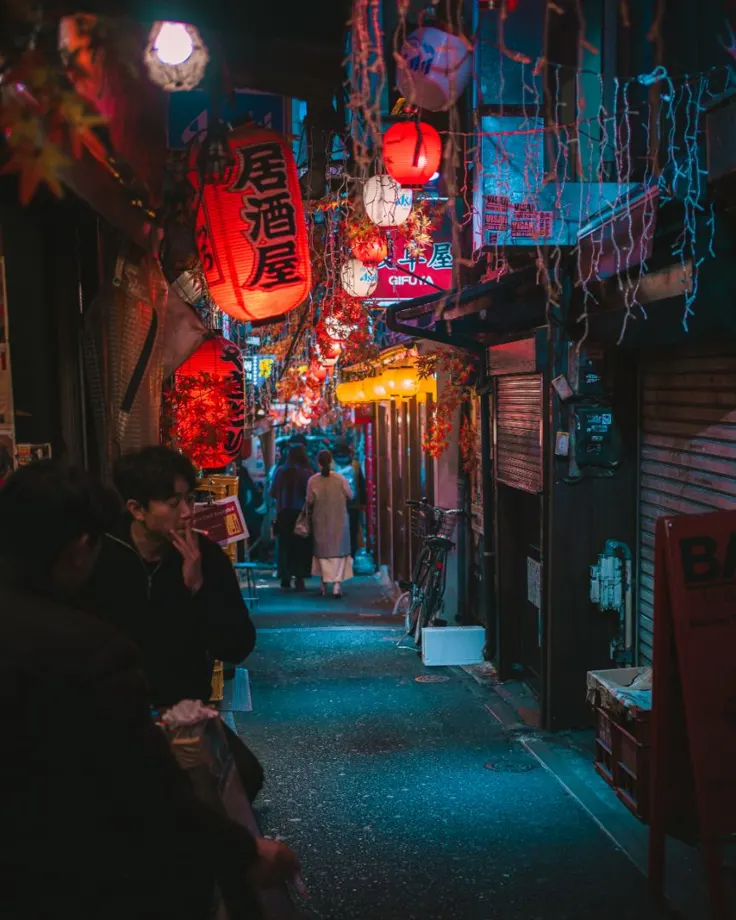
A lane of tiny bars packed under the railway beside Shinjuku Station, and one of the most photogenic streets in the city. The decorations change with the season - sakura in spring, maple in autumn - so it never photographs quite the same way twice.
One gotcha
Go late in the evening. Earlier the lane is shoulder to shoulder and you will not get a clean frame. Tripods are not realistic in a space this narrow.
Photography
Getting There
Kabukicho
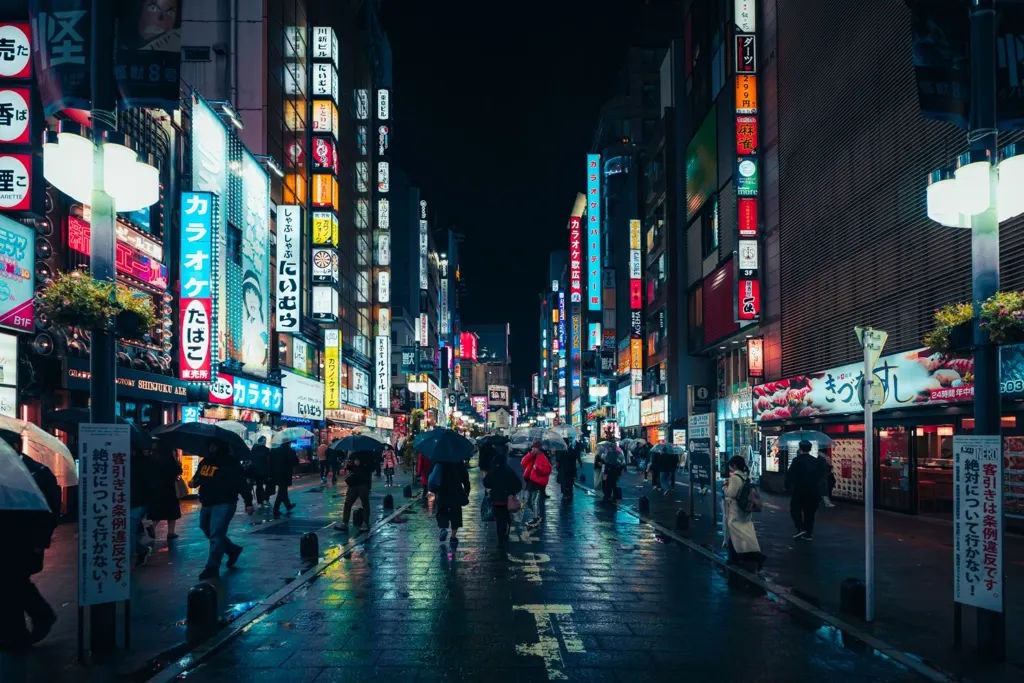
The street in front of Toho Cinemas is plastered wall to wall with signage, which is the whole shot. Kabukicho stays busy until very late, so this is one of the few places you can shoot at midnight and still have a crowd to work with.
Photography
Getting There
One gotcha
Best on a rainy night - umbrellas in the crowd make the frame.
Shinjuku Golden Gai
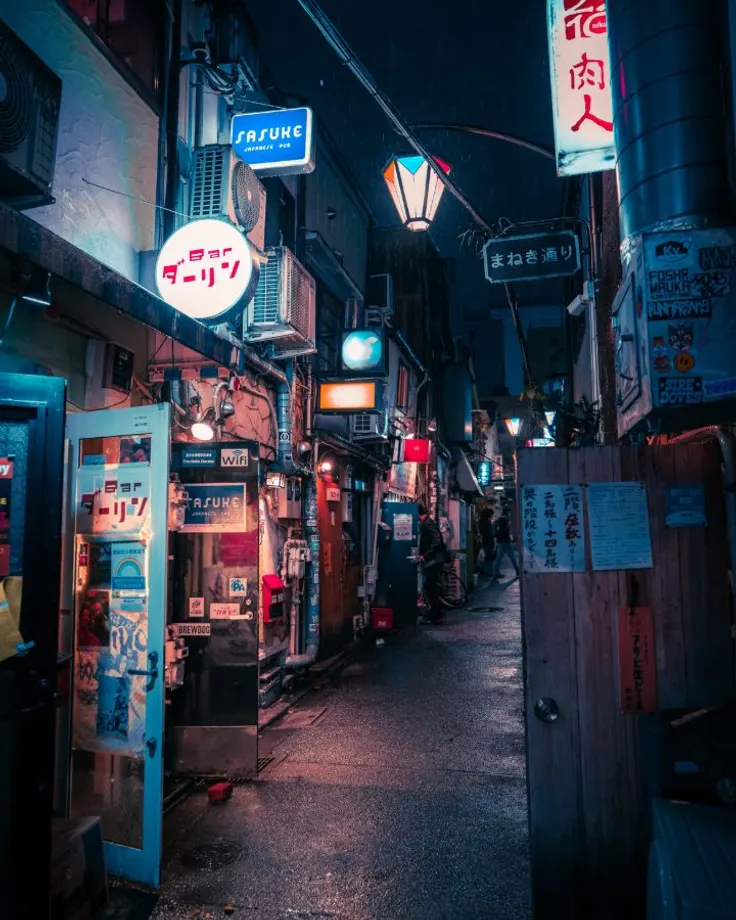
A grid of tiny lanes packed with bars, right next to Kabukicho. This one is less about a single composition and more about walking - it rewards spontaneous frames rather than a setup you planned in advance.
One gotcha
Tight lanes and working bars: shoot handheld and be discreet.
Photography
Getting There
Tokyo Tower Bridge Street View
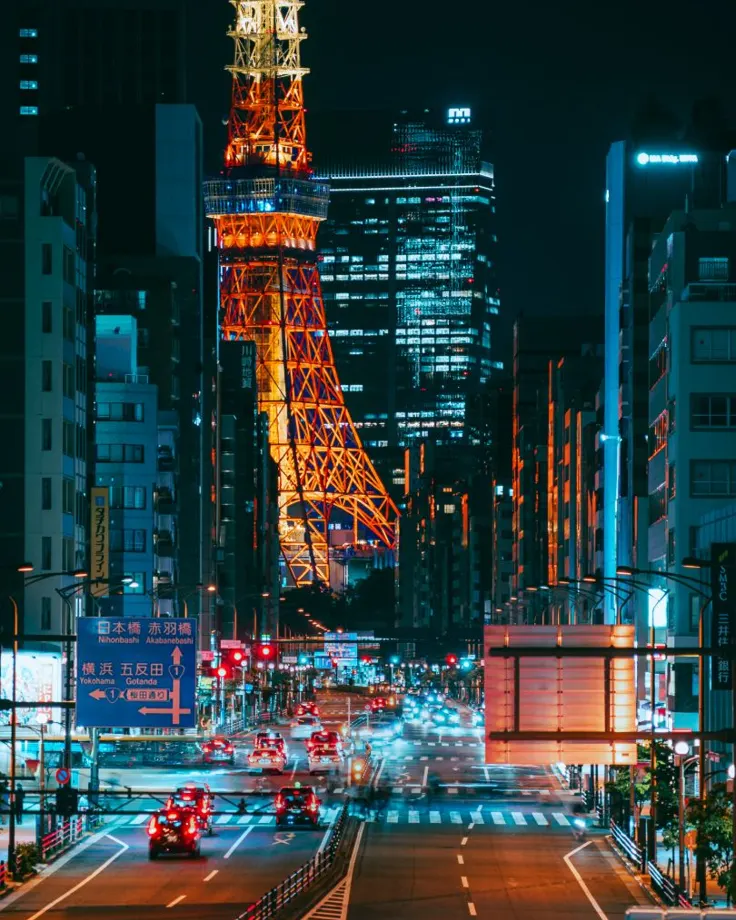
A clean street-level view straight at Tokyo Tower, and one of the quieter spots on this list. The compression is what makes it - the tower reads far larger than it does to the eye.
One gotcha
You need a telephoto. Anything over 100mm; shorter will not work.
Photography
Getting There
BANGKOK NIGHT Shibuya
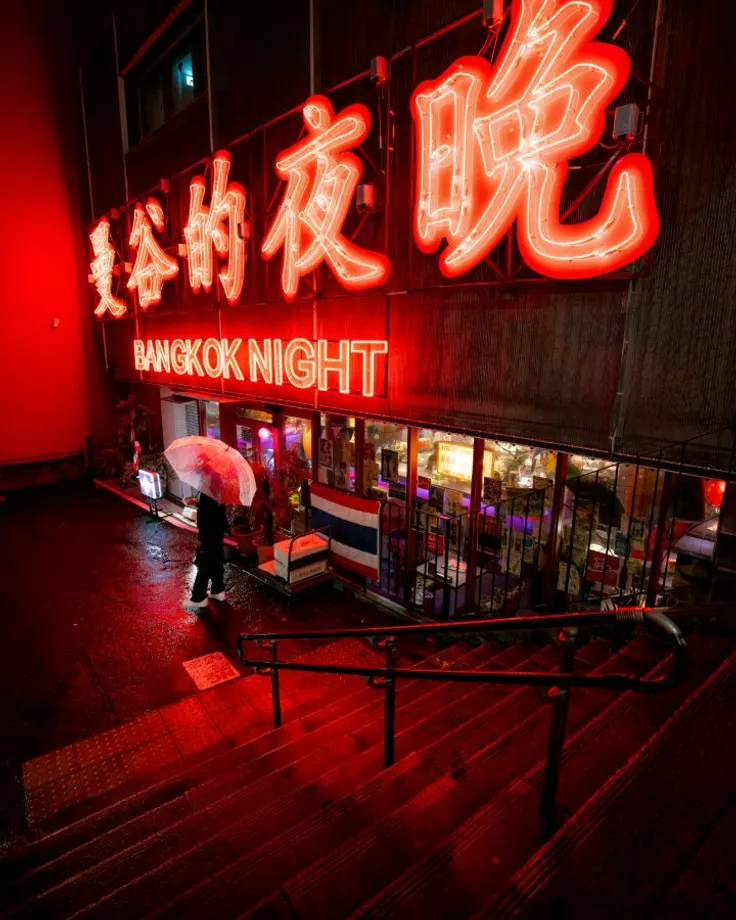
A small restaurant frontage buried in Shibuya that photographs far above its size. It is the kind of spot you would walk straight past in daylight and that turns into a complete frame after dark.
One gotcha
Wait for rain. Dry, it is much less interesting.
Photography
Getting There
Tokyo Metropolitan Government Building North Observatory
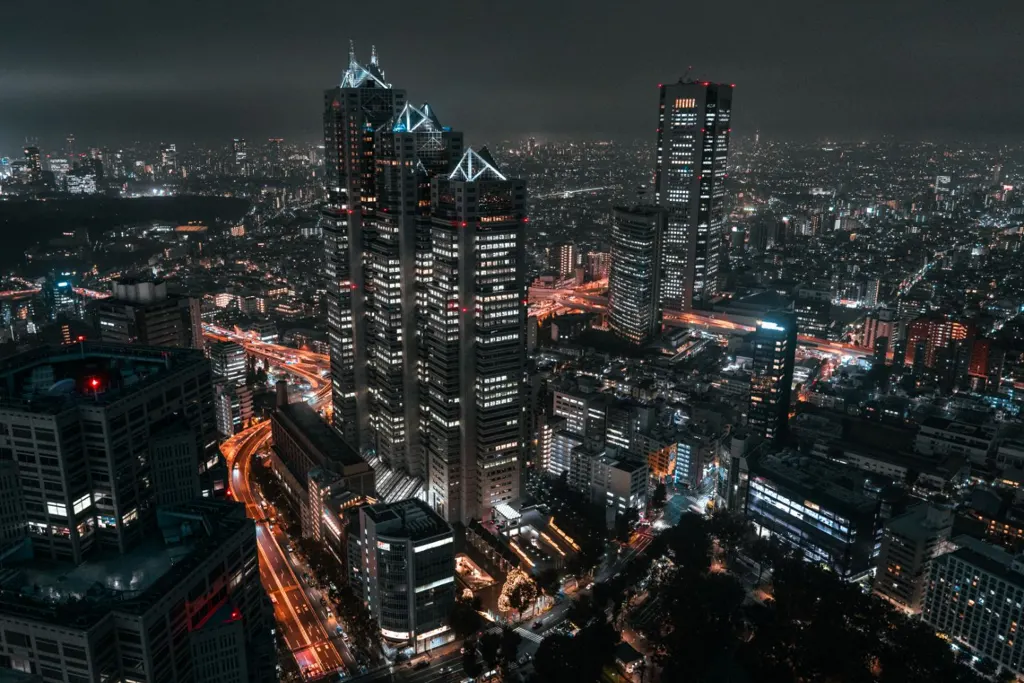
One of the best observation decks in the city and completely free, which makes it the easiest recommendation here. No ticket, no booking, no queue of the kind Shibuya Sky generates.
Photography
Getting There
One gotcha
Bring a lens hood and press it to the glass - reflections are the only real problem up here. Tripods are not workable.
Shibuya Sky
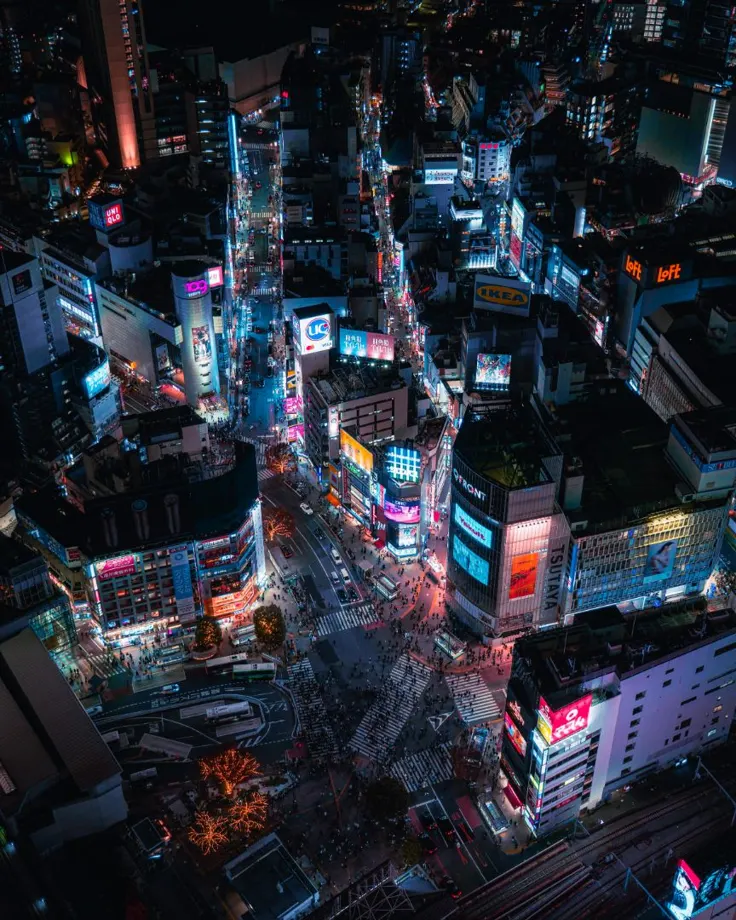
The Shibuya Crossing view, and a 360 degree panorama of the whole city on top of it. On a clear day you can pick out Mount Fuji from the deck. The slot worth booking is sunset into blue hour, when the lights come up while there is still colour left in the sky.
One gotcha
Book far in advance - tickets are genuinely hard to get. The annual pass used to be the way around both the booking and the queue, but it was paused in 2025.
Photography
Getting There
Roppongi - Tokyo City View
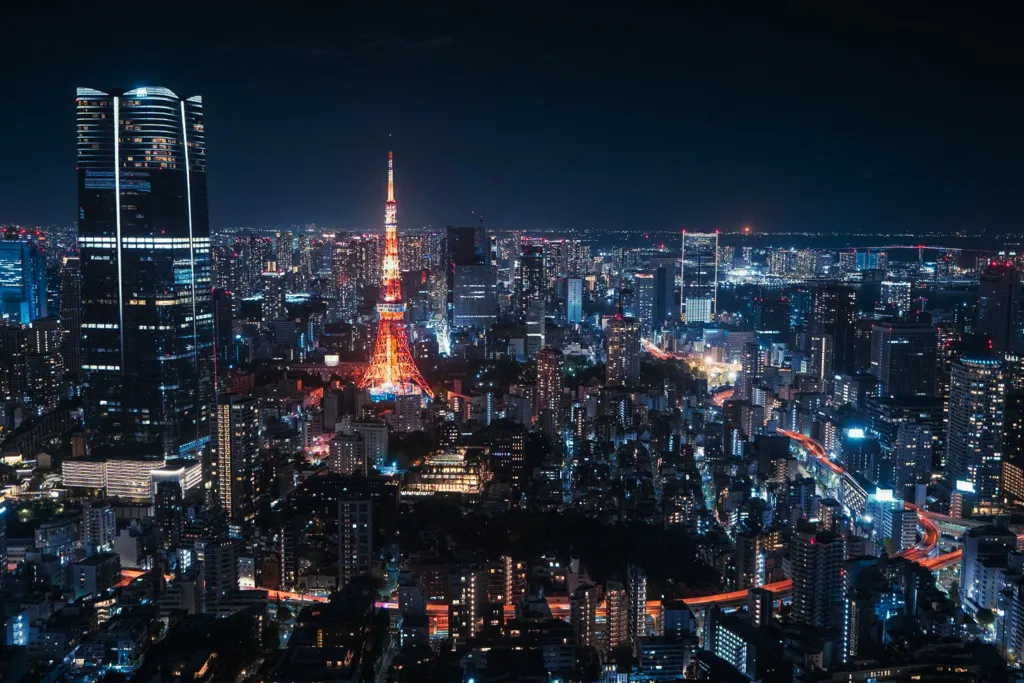
Inside the Mori Tower at Roppongi Hills, and one of the best angles on Tokyo Tower anywhere in the city. Higher and further back than the street view, so you get the tower against the city rather than against the sky.
Photography
Getting There
One gotcha
Lens hood against the glass again.
Uonami Fish Bar
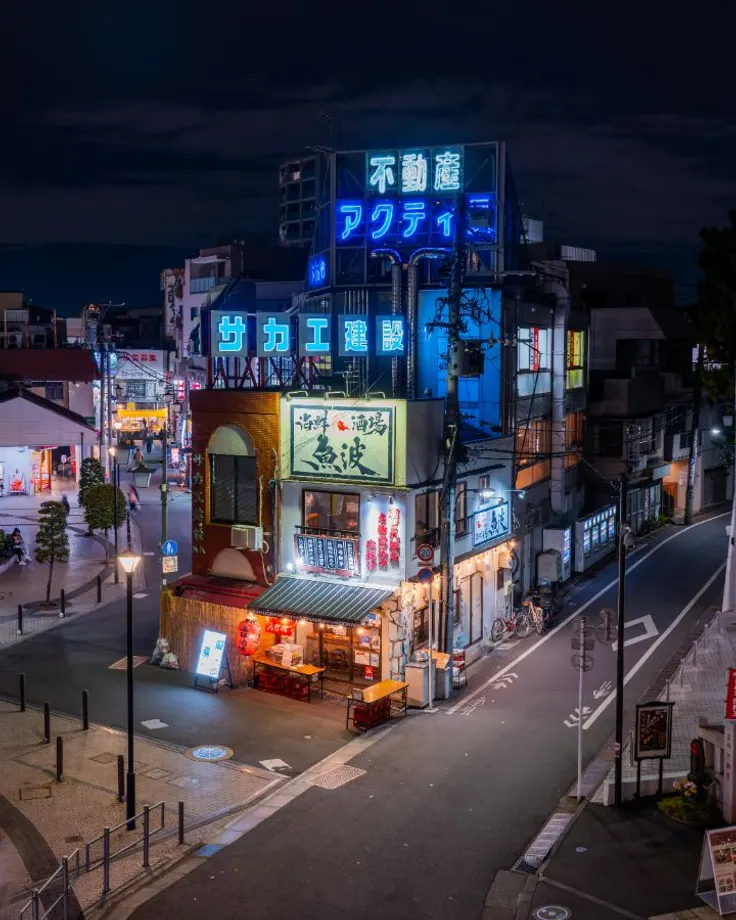
A fish bar right at Shiinamachi Station, a short train ride from Ikebukuro, and almost nobody photographs it. Walk onto the nearby bridge for the view that makes the trip worth it.
One gotcha
The shot is from the bridge, not from in front of the bar.
Photography
Getting There
Asakusa Culture Tourist Information Center
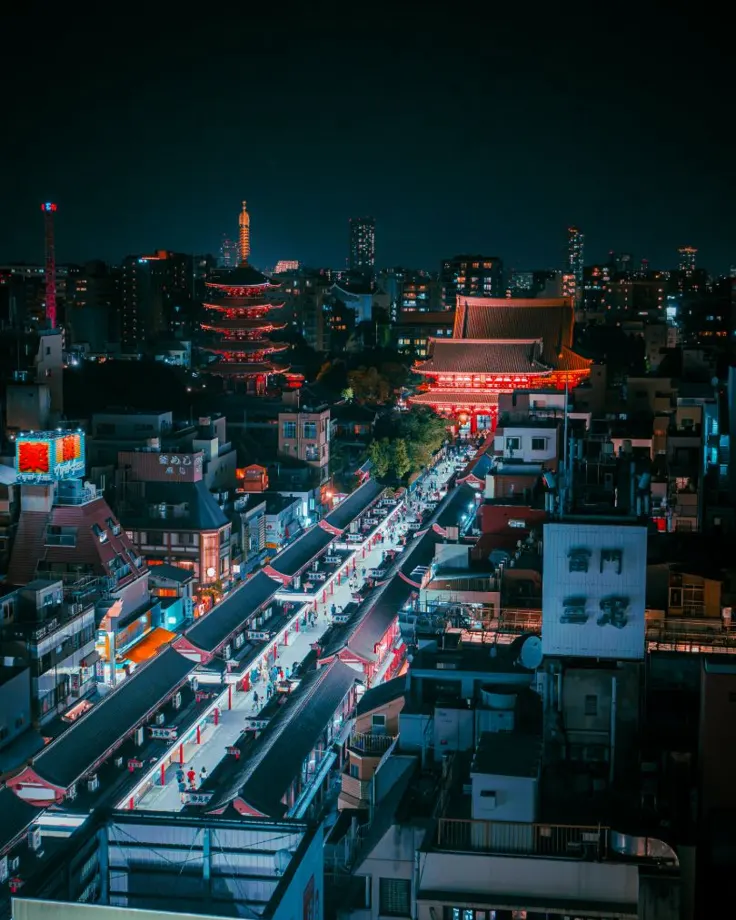
Free, quiet, and directly opposite Senso-ji - the observation deck at the top of the tourist information centre gives you Asakusa from above with no ticket and usually no crowd. Wait until the temple lighting comes on; before that you are photographing a dark roofline.
One gotcha
Google lists the centre as closing at 8pm, but the deck stays open until about 10pm. Worth checking on the day rather than trusting the listing.
Photography
Getting There
Akihabara Bridge Spot
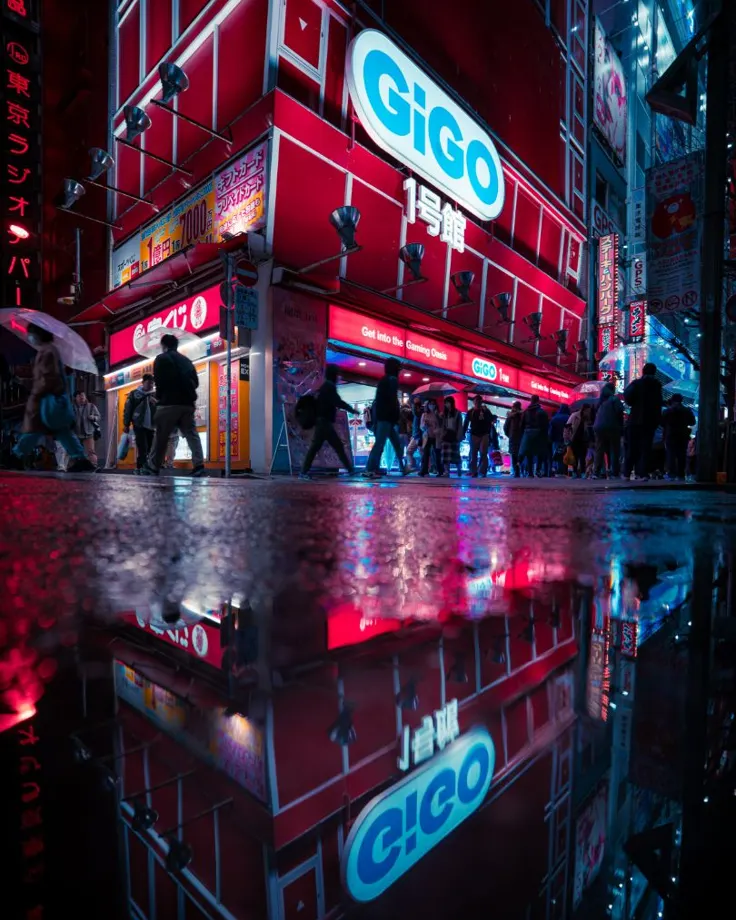
The old Sega arcade corner, now the Silk Hat arcade under Gigo. It is the Akihabara frame most people picture, and the wet-road reflection is what lifts it out of being a snapshot.
One gotcha
This is a live street crossing. Watch the traffic rather than the viewfinder, and do not set up in the road.
Photography
Getting There
Jukken Bridge
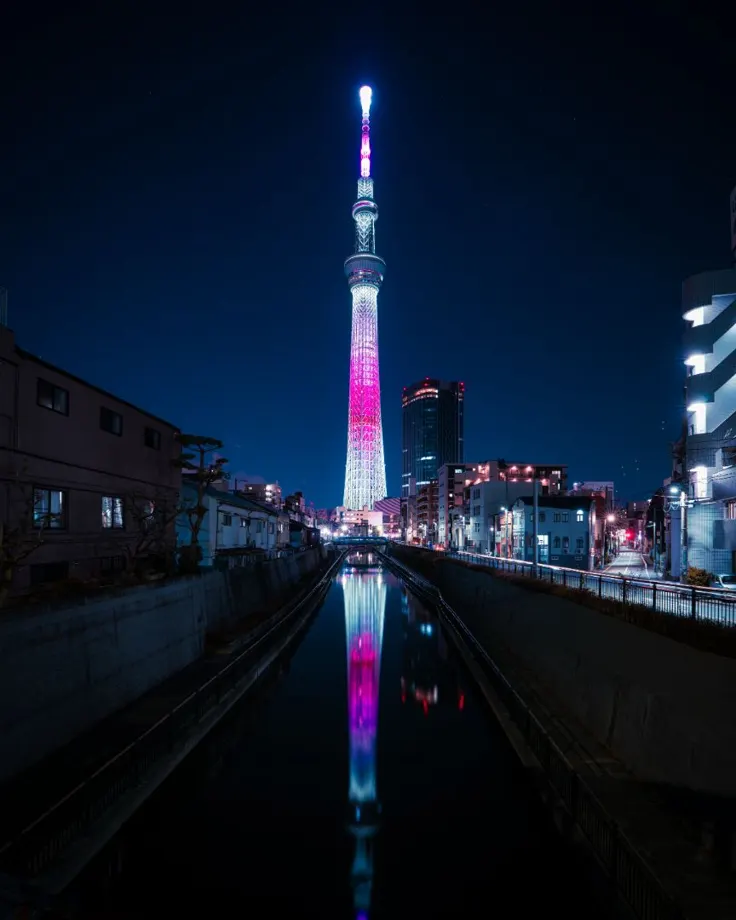
The Skytree doubled in the canal below it. This is the most spectacular Skytree view on the list and one of the least crowded - the reflection does all the work.
One gotcha
No tripods, and the reflection needs still water, so avoid windy nights.
Photography
Getting There
Azabudai Hills Mori JP Tower Tokyo Tower View
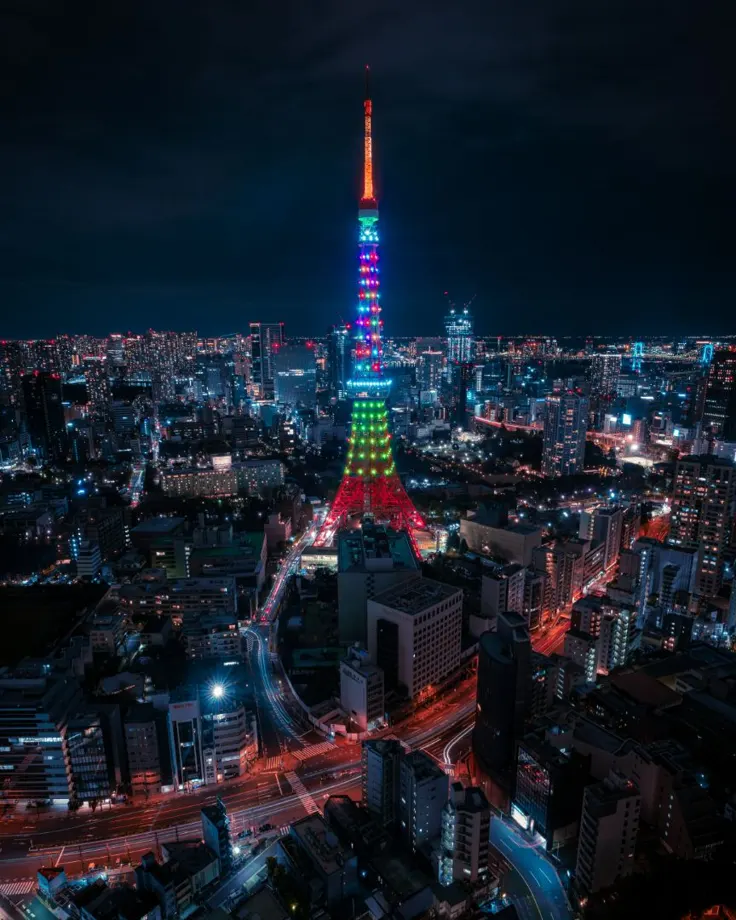
The newest of the Tokyo Tower viewpoints, from the upper floors of the Mori JP Tower. When it opened the high deck was free to anyone; access has since tightened.
One gotcha
You now need a restaurant reservation to reach the elevator to the upper deck. Bring a lens hood for the windows.
Photography
Getting There
Ueno Shopping Street
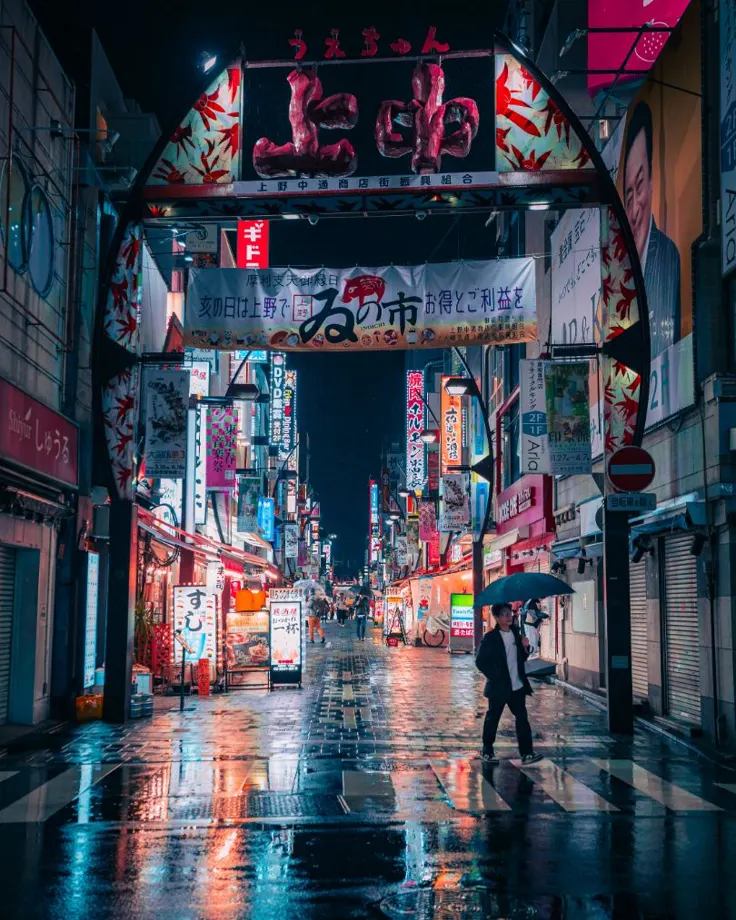
The entrance to one of Ueno's shopping and restaurant streets, right by the Ueno-okachimachi Station exit. Shot long from across the road it stacks the signage into a dense, layered frame.
One gotcha
Shoot from across the street with a long focal length - up close it falls apart.
Photography
Getting There
Tokyo night photography: common questions
Do I need a tripod for night photography in Tokyo?
Mostly no, and in several of these locations a tripod is either banned or impractical. Mag's Park, Jukken Bridge and the Azabudai Hills deck do not allow them; Omoide Yokocho and Golden Gai are too narrow to use one without blocking the lane. Modern high-ISO performance covers most of these frames handheld. Kabukicho, the Tokyo Tower street view, Uonami Fish Bar and Ueno are the spots where a tripod is genuinely fine.
Can I fly a drone at these locations?
No. Drones are not permitted at any of the fifteen spots in this guide. Central Tokyo is dense restricted airspace and the built-up areas here are off limits under Japan's civil aviation rules.
Which of these Tokyo night spots are free?
Eleven of the fifteen. The Tokyo Metropolitan Government Building observatory is the standout - a genuinely excellent free deck with no booking. Shibuya Sky and Roppongi's Tokyo City View charge admission, Mag's Park asks you to buy a drink instead of a ticket, and Azabudai Hills now requires a restaurant reservation to reach the upper deck.
What is the best time of year for night photography in Tokyo?
All of these work year round - none of them depend on a season. What changes the results far more than the month is the weather: rain is worth planning around, because the wet-road reflections at Kabukicho, Akihabara and Bangkok Night are what make those frames. Omoide Yokocho also changes its decorations seasonally, with sakura in spring and maple in autumn.
How do I get between these spots?
All fifteen are reachable on public transport and all are rated easy to reach. They cluster into three groups that each make a comfortable evening: Shibuya, Shinjuku, and the east side around Asakusa, Akihabara, Ueno and the Skytree. Roppongi and the two Tokyo Tower viewpoints sit between the first two.
Save this list to your FocalGems account
Offline maps, one-tap navigation, add your own notes.
Save this list